
FDIC
FDIC-Insured - Backed by the full faith and credit of the U.S. Government.

Explore cryptocurrency investing at Schwab.

Get crypto exposure through a variety of crypto-related investments with no account minimum—all from a brand you know.

Schwab Crypto™ is coming soon.

With the new account from Charles Schwab Premier Bank, SSB, buy and sell Bitcoin and Ethereum at a price among the lowest in the industry1 – the fee is just 0.75% of your trade value and zero spread. Sign up now for an opportunity to gain early access.*
A gold Bitcoin symbol on a dark blue coin surrounded by subtle concentric rings.

How to invest in cryptocurrency at Schwab now.

We have a range of investment choices for getting exposure to cryptocurrency with a Schwab brokerage account.

Access ETPs that invest directly in Bitcoin, Ethereum, and other cryptocurrencies.

Choose from a number of exchange-traded products (ETPs) Tooltip that invest directly in a variety of cryptocurrencies, providing exposure to the price movement of those assets—no crypto wallet required.

Log in to explore all crypto-invested ETPs in the "digital assets" category in Fund Finder

Explore crypto-related stocks and ETPs.

Access stocks of companies that operate in the cryptocurrency and digital assets ecosystem, plus exchange-traded products and exchange-traded funds (ETFs) that provide exposure to crypto futures contracts and the cryptocurrency industry as a whole.

Examples include Coinbase (COIN), MicroStrategy (MSTR), Riot Platforms (RIOT), and Schwab Crypto Thematic ETF (STCE).

Log in to explore crypto-related products in the "digital assets" category in Fund Finder

Other ways to invest in cryptocurrency.

  • Schwab Investing Themes® allows you to explore 40+ stock themes—including Blockchain, AI, and Big Data. Starting at a $250 minimum investment and a $250 trade/trading minimum.
  • Crypto futures (including Bitcoin futures and micro Bitcoin futures) for clients using a futures account through Charles Schwab Futures and Forex LLC.2
  • Mutual funds that invest in the broader digital asset ecosystem or cryptocurrency futures contracts.
  • Cryptocurrency coin trusts that invest directly in underlying cryptocurrencies and trade over the counter (OTC).
  • Listed options in crypto-related securities (including options on spot Bitcoin ETPs).

Ready to get started?

Access crypto-related investments in the same place you manage the rest of your portfolio—all from a brand trusted by millions and recognized among the best online brokers.3

Build your crypto knowledge.

What is cryptocurrency?

Cryptocurrency is a type of digital asset that uses cryptography and blockchain technology to record and verify transactions. These transactions often take place on networks that are decentralized or perceived as operating without a central authority, which has contributed to growing interest in the space. Two of the most widely recognized cryptocurrencies are Bitcoin and Ether, which is the native asset of the Ethereum network.

Read our article "What is Cryptocurrency and How Does It Work?"
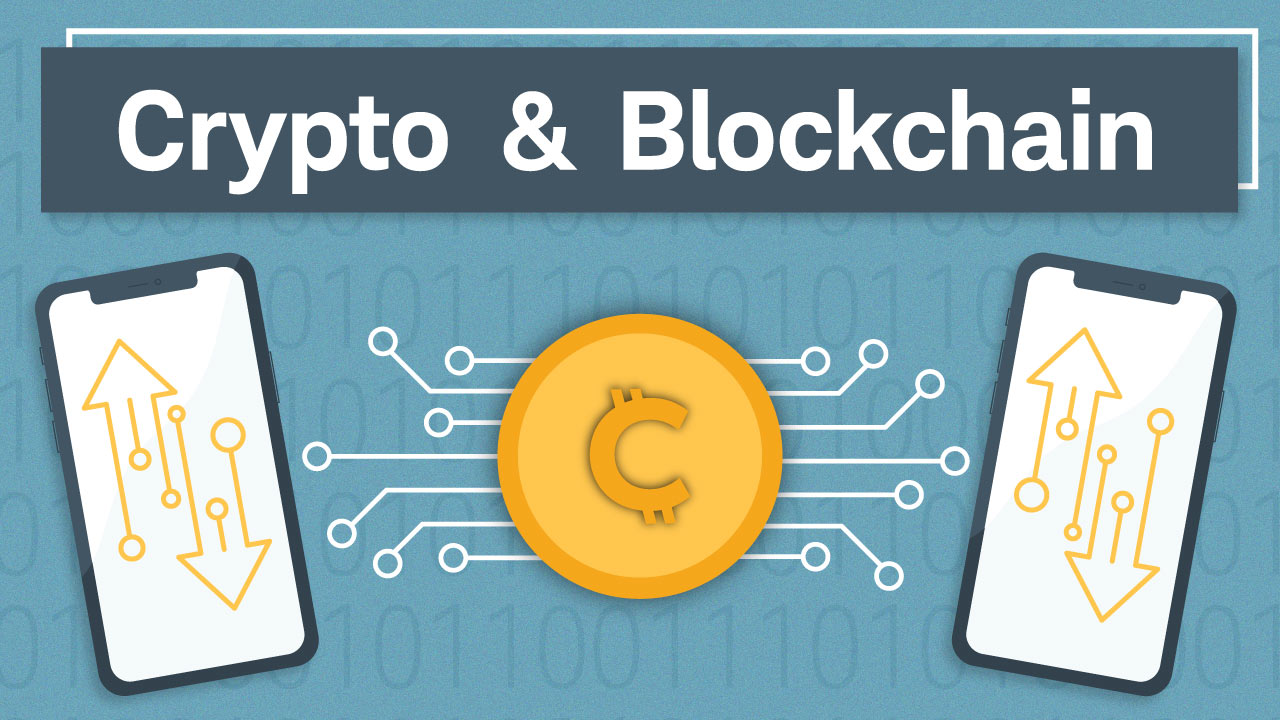
Volume 90%
Press shift question mark to access a list of keyboard shortcuts
Keyboard Shortcuts
play/pause
increase volume
decrease volume
seek forwards
seek backwards
toggle captions
toggle fullscreen
mute/unmute
seek to %
SPACE
c
f
m
0-9
00:00
00:00
00:00
 

Upbeat music plays throughout.

Narrator: Cryptocurrencies like bitcoin, ethereum, and litecoin are digital currencies that can be used for internet-based electronic payments or as a store of value that is independent of a bank or credit card company.

These cryptocurrencies, sometimes called coins, use blockchain technology—which is designed to make transactions of all kinds secure, transparent, and accurate.

A blockchain is a record of digital transactions that acts as a public ledger. The ledger is maintained by a global computer network that verifies transactions by solving complicated cryptographic math problems.

It works like this: When an individual makes a transaction, a message describing the transaction is sent over the network. Then the network participants race to guess a code that opens a data container called a "block," where transactions are stored. Once the code is solved, the block is added to the chain, and a subset of pending transactions are permanently recorded in the public ledger.

This process of maintaining the blockchain is often called mining because those who pledge their computing power to the network and successfully solve new blocks receive cryptocurrency as a reward.

The mining process is one way an individual can acquire cryptocurrency or coins. Individuals can also acquire coins when they accept them as payment or buy them from a digital exchange. Some investors see cryptocurrencies as a speculation opportunity. Others believe they can help balance risk by adding diversification to a typical portfolio.

However, investing in cryptocurrencies has many risks.

The price of cryptocurrencies can be extremely volatile and change by hundreds or even thousands of dollars in a single day. Cryptocurrency exchanges can be hacked, passwords and private keys can be lost or stolen, and transactions are irreversible. Additionally, cryptocurrencies are not stored in traditional banks and lack the regulatory protections of other types of investments.

Investors who are comfortable with the risks can buy and sell cryptocurrencies on cryptocurrency exchanges. There are also ways to gain exposure to cryptocurrencies without actually owning them.

For example, investors can buy stock in companies associated with cryptocurrencies or blockchain technology, such as those that create hardware used for mining. Investors can also purchase trusts or funds that provide direct or indirect cryptocurrency exposure, and qualified clients can trade bitcoin futures.

These types of investments allow investors to speculate on the direction of cryptocurrency prices but still have unique and significant risks to consider.

No matter how you choose to participate in the cryptocurrency market, remember that as with any asset, it's important to determine your risk tolerance, conduct thorough research, and monitor your positions carefully.

Onscreen text: [Schwab logo] Own your tomorrow®

Video Transcript

Investing Basics: Cryptocurrency

Upbeat music plays throughout.

Narrator: Cryptocurrencies like bitcoin, ethereum, and litecoin are digital currencies that can be used for internet-based electronic payments or as a store of value that is independent of a bank or credit card company.

These cryptocurrencies, sometimes called coins, use blockchain technology—which is designed to make transactions of all kinds secure, transparent, and accurate.

A blockchain is a record of digital transactions that acts as a public ledger. The ledger is maintained by a global computer network that verifies transactions by solving complicated cryptographic math problems.

It works like this: When an individual makes a transaction, a message describing the transaction is sent over the network. Then the network participants race to guess a code that opens a data container called a "block," where transactions are stored. Once the code is solved, the block is added to the chain, and a subset of pending transactions are permanently recorded in the public ledger.

This process of maintaining the blockchain is often called mining because those who pledge their computing power to the network and successfully solve new blocks receive cryptocurrency as a reward.

The mining process is one way an individual can acquire cryptocurrency or coins. Individuals can also acquire coins when they accept them as payment or buy them from a digital exchange. Some investors see cryptocurrencies as a speculation opportunity. Others believe they can help balance risk by adding diversification to a typical portfolio.

However, investing in cryptocurrencies has many risks.

The price of cryptocurrencies can be extremely volatile and change by hundreds or even thousands of dollars in a single day. Cryptocurrency exchanges can be hacked, passwords and private keys can be lost or stolen, and transactions are irreversible. Additionally, cryptocurrencies are not stored in traditional banks and lack the regulatory protections of other types of investments.

Investors who are comfortable with the risks can buy and sell cryptocurrencies on cryptocurrency exchanges. There are also ways to gain exposure to cryptocurrencies without actually owning them.

For example, investors can buy stock in companies associated with cryptocurrencies or blockchain technology, such as those that create hardware used for mining. Investors can also purchase trusts or funds that provide direct or indirect cryptocurrency exposure, and qualified clients can trade bitcoin futures.

These types of investments allow investors to speculate on the direction of cryptocurrency prices but still have unique and significant risks to consider.

No matter how you choose to participate in the cryptocurrency market, remember that as with any asset, it's important to determine your risk tolerance, conduct thorough research, and monitor your positions carefully.

Onscreen text: [Schwab logo] Own your tomorrow®

Access livestreaming insights and on-demand education.

Crypto insights & education

Explore articles and videos that cover digital asset basics, market trends, and evolving regulations, helping you build knowledge and stay informed as this new market continues to take shape.

Schwab Coaching®

Join our daily webcasts with Q&A—live and on-demand—to see real-time trade demos and learn ways to apply trading principles in current market conditions using Schwab platforms and tools.

Schwab Network™

Get real-time commentary and data-driven insights—from opening to closing bell—with livestreaming shows and on-demand clips from our media affiliate.**

Cryptocurrency FAQs

While you'll soon be able to apply to open a Schwab Crypto account, offered by Charles Schwab Premier Bank, SSB, you cannot currently buy and sell individual cryptocurrencies through a Schwab brokerage account.

Sign up to receive updates about Schwab Crypto, including when you can apply to open a Schwab Crypto account, which will require having a Schwab brokerage account.

In the meantime, you can get exposure to cryptocurrencies in multiple ways at Schwab: ETPs that invest in a variety of cryptocurrencies, including Dogecoin, Solana, Bitcoin, and Ethereum; ETFs and mutual funds that invest in crypto futures or the broader cryptocurrency or digital asset ecosystem; individual equities with exposure to cryptocurrencies or the broader digital asset ecosystem; OTC trusts; and a variety of cryptocurrency futures (for approved accounts).

Cryptocurrency, often called crypto for short, is a type of digital currency used on systems that use cryptography to secure transactions and verify transfers on a decentralized network, typically a blockchain. Unlike traditional government-issued currencies, cryptocurrencies operate without a central authority.

All cryptocurrencies are digital, but not all digital currencies are cryptocurrencies. Digital currency refers broadly to money that exists electronically. Virtual currency is a subset of digital currency, often used within a specific environment. Cryptocurrency is a form of virtual currency designed for peer-to-peer exchange, with Bitcoin and Ethereum being two well-known examples.

Keep in mind that cryptocurrencies can be used outside traditional payment and banking systems and are not generally subject to government controls for currencies regarding value, stability, backing, or other features.

Cryptocurrency has drawn interest from those attracted to innovation and the perception of limited government oversight. Some traders viewed it as an alternative to traditional assets like stocks or bonds, and trading momentum fueled volatile price increases. Media coverage expanded awareness, and adoption grew. Today, major companies like Microsoft, PayPal, and Overstock accept Bitcoin as payment.

The decentralized nature of cryptocurrency appeals to many investors. Others may be attracted to the volatility and potential for price appreciation that may outpace those of stocks. Please note, cryptocurrencies carry a substantial level of risk and are not suitable for all investors.

Cryptocurrencies are speculative and highly volatile. Their prices, along with those of indirect investments tied to crypto, can swing significantly based on supply and demand rather than inherent value. Unlike traditional assets, cryptocurrencies do not fit into standard allocation models and are not comparable to commodities like gold or currencies backed by governments.

Bitcoin, for example, has no earnings, revenues, or conventional valuation metrics such as price-to-earnings or book value. As a result, we do not endorse any method for determining its intrinsic value beyond current market price.

Investors should understand that crypto investments could lose their entire value. If you are not comfortable with extreme risk and sharp market swings, this may not be an appropriate asset class.

Beyond price volatility, cryptocurrencies carry additional risks. They lack regulatory infrastructure and protections, unlike FDIC insurance for bank deposits. Investors are fully responsible for securing any crypto holdings. As the SEC notes, crypto markets offer "substantially less investor protection than traditional securities markets and may be more vulnerable to fraud and manipulation."

At this time, Schwab does not accept cryptocurrency deposits, nor do we accept or disburse cryptocurrencies for settlement of securities or futures transactions.

ETPs available at Schwab provide exposure to cryptocurrencies, cryptocurrency futures contracts, and companies that are focused on servicing the cryptocurrency market and digital assets.

Schwab Asset Management® also offers the Schwab Crypto Thematic ETF that provides global exposure to companies that may benefit from the development or utilization of cryptocurrencies and other digital assets, and the business activities connected to the blockchain and other distributed ledger technology. This ETF does not invest directly in any cryptocurrency or digital assets.

These ETPs, as well as cryptocurrency or digital asset-related ETPs that the SEC may approve in the future, can be found in the Morningstar® category "Digital Assets" using Schwab's Fund Finder tool.

Yes, a futures account through Charles Schwab Futures and Forex LLC is required to trade bitcoin futures contracts, and certain requirements must be met to trade futures. Learn how to get started with futures here.

The IRS treats cryptocurrency as property, not currency. Transactions in cryptocurrency markets are thus considered taxable by the Internal Revenue Service (IRS) whenever a taxable event occurs, such as selling cryptocurrency for a fiat currency (i.e., U.S. dollars, Euros, etc.) or when traded for another asset. Investors are responsible for tracking cost basis, gains, and other reporting. If you have questions or concerns about the potential tax implications of transacting in cryptocurrencies, you should refer to this IRS publication or consult with a tax advisor.

Charles Schwab Premier Bank, SSB, is a subsidiary of The Charles Schwab Corporation. It is a separate but affiliated company of Charles Schwab & Co., Inc. (Member SIPC).

Blockchain is the decentralized technology behind cryptocurrencies. It functions as a public, verifiable record of transactions designed to be permanent and tamper-resistant. While closely linked to crypto, blockchain has broader potential applications, including smart contracts, supply chain tracking, and financial services. Owning cryptocurrency does not equate to investing in blockchain or its future use cases.

Schwab clients can log in to chat with our specialists on the platform of their choice.

On thinkorswim®, users can chat Sunday from 5 p.m. to 9 p.m., Monday through Thursday from 7 a.m. to 8 p.m., and Friday from 7 a.m. to 6 p.m. ET.

For Schwab.com and Schwab Mobile users, support is available via chat, phone, or email 24/7, 365.

For questions regarding direct cryptocurrency investing, contact our dedicated line at 866-295-0914. For all other cryptocurrency investing questions (crypto ETPs, crypto futures, crypto-related securities, and more), call 800-435-4000.

Ready to get started?

Already a Schwab client?

Want updates on Schwab Crypto? Sign up here

Contact us

Have questions? We are here to help.

Get in touch

1. By signing up for Schwab Crypto updates, you’re opting in to receive Schwab marketing emails along with information and notifications about the Schwab Crypto account, including when you can apply to open an account-subject to review and approval.

Not all applicants will be eligible and receiving a notification is not an indication of eligibility.

Timing for the ability to apply for a Schwab Crypto account is subject to availability and the discretion of Charles Schwab Premier Bank, SSB.

Schwab Crypto™ accounts will be available (i) in all U.S. states except for New York and Louisiana (ii), and are not available in any U.S. territories or in any international jurisdictions. Accounts may be restricted or closed if you move to an unsupported jurisdiction. Not all clients will qualify.

By joining the interest list, you will be subscribed to receive updates related to crypto at Schwab, and other
educational or promotional content. Crypto is highly volatile, can become illiquid at any time, and is for investors
with a high-risk tolerance. Investors could lose the entire value of their investments.

1. Source: Barclays independent report "U.S. Brokers, Asset Managers & Exchanges Revisiting Crypto Pricing" April 2026. Data contained herein from third party providers is obtained from what are considered reliable sources. However, its accuracy, completeness or reliability cannot be guaranteed. Supporting documentation for any claims or statistical information is available upon request.

*By signing up for Schwab Crypto updates, you're opting in to receive Schwab marketing emails along with information and notifications about the Schwab Crypto account, including when you can apply to open an account-subject to review and approval.

All crypto trades are subject to a fee. Minimum fees apply. Please read the Cryptocurrency Pricing Guide for important information, pricing, and disclosures.

Not all applicants will be eligible and receiving a notification is not an indication of eligibility.

Timing for the ability to apply for a Schwab Crypto account is subject to availability and the discretion of Charles Schwab Premier Bank, SSB.

This material is intended for general informational purposes only. This should not be considered an individualized recommendation or personalized investment advice. The cryptocurrencies mentioned are not suitable for everyone. Each investor needs to review an investment strategy for his or her own particular situation before making any investment decisions.

Cryptocurrency products and the Schwab Crypto™ account will be offered by Charles Schwab Premier Bank, SSB, Member FDIC.

Cryptocurrencies to be offered by Charles Schwab Premier Bank are not securities, are not protected by the SIPC, are not insured by the FDIC, are not deposits; and may lose value.

Schwab Crypto™ accounts will be available (i) in all U.S. states except for New York and Louisiana (ii), and are not available in any U.S. territories or in any international jurisdictions. Accounts may be restricted or closed if you move to an unsupported jurisdiction. Not all clients will qualify.

Charles Schwab Premier Bank, SSB and Charles Schwab & Co., Inc. are separate but affiliated companies and subsidiaries of The Charles Schwab Corporation.

Digital currencies such as bitcoin are highly volatile and not backed by any central bank or government. Digital currencies lack many of the regulations and consumer protections that legal-tender currencies and regulated securities have. Due to the high level of risk, investors should view digital currencies as a purely speculative instrument.

Cryptocurrency-related products carry a substantial level of risk and are not suitable for all investors. Investments in cryptocurrencies are relatively new, highly speculative, and may be subject to extreme price volatility, illiquidity, and increased risk of loss, including your entire investment in the fund. Spot markets on which cryptocurrencies trade are relatively new and largely unregulated, and therefore, may be more exposed to fraud and security breaches than established, regulated exchanges for other financial assets or instruments. Some cryptocurrency-related products use futures contracts to attempt to duplicate the performance of an investment in cryptocurrency, which may result in unpredictable pricing, higher transaction costs, and performance that fails to track the price of the reference cryptocurrency as intended. Please read more about risks of trading cryptocurrency futures here.

Investors in ETPs, ETFs or mutual funds should consider carefully information contained in the prospectus, or if available, the summary prospectus, including investment objectives, risks, charges, and expenses. You can request a prospectus by calling 800-435-4000. Please read the prospectus carefully before investing.

Investment returns will fluctuate and are subject to market volatility, so that an investor's shares, when redeemed or sold, may be worth more or less than their original cost. Shares of ETFs are not individually redeemable directly with the ETF. Shares are bought and sold at market price, which may be higher or lower than the net asset value (NAV).

The Schwab Crypto Thematic ETF will not invest in any cryptocurrency or digital assets directly. It invests in companies listed in the Schwab Crypto Thematic Index and is designed to deliver global exposure to companies that may benefit from the development or utilization of cryptocurrencies (including bitcoin) and other digital assets, and the business activities connected to blockchain and other distributed ledger technology.

The Schwab Crypto Thematic ETF is non-diversified, which means that it may invest in the securities of relatively few issuers. As a result, a single adverse economic or regulatory occurrence may have a more significant effect on investments, and the fund may experience increased volatility. The technology relating to digital assets, including blockchain, is new and developing and the risks associated with digital assets may not fully emerge until the technology is widely used. In addition, the values of the companies included in the fund may not be a reflection of their connection to digital assets but may be based on other business operations or lines of business which means that such companies' operating results may not be significantly tied to their respective activities related to digital assets. The Schwab Crypto Thematic ETF invests in a portfolio of securities that are based on a theme and its performance may suffer if such theme is not correctly identified or if the theme develops in an unexpected manner. Performance may also suffer if the securities included in the index do not benefit from the development of such theme.

Equity and index options carry a high level of risk and are not suitable for all investors. Certain requirements must be met to trade options through Schwab. Please read the Options Disclosure Document titled "Characteristics and Risks of Standardized Options" before considering any option transaction.

Diversification strategies do not ensure a profit and do not protect against losses in declining markets.

Schwab Investing Themes is for informational purposes only; it is not intended to be investment advice (including fiduciary advice as defined under the Employee Retirement Income Security Act or the Internal Revenue Code) or a recommendation of any stock or investment strategy. Please read the Schwab Investing Themes™ Terms and Conditions.

2. Futures, and Futures options trading involves substantial risk and is not suitable for all investors. Please read the Risk Disclosure Statement for Futures and Options prior to trading futures products.

Futures accounts are not protected by the Securities Investor Protection Corporation (SIPC).

Read additional CFTC and NFA futures and forex public disclosures for Charles Schwab Futures and Forex LLC.

Futures and futures options trading services provided by Charles Schwab Futures and Forex LLC. Trading privileges subject to review and approval. Not all clients will qualify.

Charles Schwab Futures and Forex LLC is a CFTC-registered Futures Commission Merchant and NFA Forex Dealer Member.

Charles Schwab Futures and Forex LLC (NFA Member) and Charles Schwab & Co., Inc. (Member SIPC) are separate but affiliated companies and subsidiaries of The Charles Schwab Corporation.

Virtual Currency Derivatives trading involves unique and significant risks. Please read NFA Investor Advisory – Futures on Virtual Currencies Including Bitcoin and CFTC Customer Advisory: Understand the Risk of Virtual Currency Trading.

You should carefully consider whether trading in virtual currency derivatives is appropriate for you in light of your experience, objectives, financial resources, and other relevant circumstances.

Please note that virtual currency is a digital representation of value that functions as a medium of exchange, a unit of account, or a store of value, but it does not have legal tender status. Virtual currencies are sometimes exchanged for U.S. dollars or other currencies around the world, but they are not currently backed nor supported by any government or central bank. Their value is completely derived by market forces of supply and demand, and they are more volatile than traditional fiat currencies. Profits and losses related to this volatility are amplified in margined futures contracts.

**Schwab Network is brought to you by Charles Schwab Media Productions Company ("CSMPC"). CSMPC, Charles Schwab Premier Bank, SSB, and Charles Schwab & Co., Inc. are separate but affiliated subsidiaries of The Charles Schwab Corporation. CSMPC is not a financial advisor, registered investment advisor, broker-dealer, or futures commission merchant.

Schwab Asset Management® is the dba name for Charles Schwab Investment Management, Inc., the investment adviser for Schwab Funds, Schwab ETFs, and separately managed account strategies. Schwab Funds are distributed by Charles Schwab & Co., Inc. (Schwab), Member SIPC. Schwab ETFs are distributed by SEI Investments Distribution Co. (SIDCO). Schwab Asset Management and Schwab are separate but affiliated companies and subsidiaries of The Charles Schwab Corporation, and are not affiliated with SIDCO.

Schwab's Financial and Other Relationships with ETFs and Mutual Funds.

3. The IBD Best Online Brokers accolade was published by IBD on January 25, 2024, and is for a 30-month timeframe. The criteria, evaluation, and ranking were determined by Investor's Business Daily in conjunction with its research partner, TechnoMetrica Market Intelligence. https://schwab-bank.online/awards Schwab paid a licensing fee to York Graphic Services, LLC. for the use of the accolade and corresponding logos through August 2, 2026.